Kensei — Sword Saint
宮本武蔵
Miyamoto Musashi
Swordsman, painter, sculptor, calligrapher, philosopher. Undefeated in over sixty duels. Wrote two of the most enduring works on strategy and self-mastery in human history.
Enter the chapter →Six months. Twenty to thirty minutes a day. One trained mind.
Twenty questions to see what is in the way of your training. The answers assign you one of ten paths — your six-month protocol. Each path is twenty to thirty minutes a day, mapped to the five scrolls of Musashi's Book of Five Rings. Library and first seven days are free. After that, €29 once for the full 180 days. No subscription.
If you have tried meditation apps, productivity systems, or therapy and quit — this is the page where you are still allowed to start over. The streak counts. Missing a day does not.
No quiz required — read every path, the full Musashi page, and the Book of Five Rings. The diagnostic only assigns you one to start with.
The Void is a six-month training program for the mind. It is structured the way Miyamoto Musashi structured his last book — five scrolls, one per month, with a sixth month for the walk back into ordinary life. Each day you do four to six small things. You check them off. You write one sentence at the end of the day. After 180 days, your relationship to your own attention is different. That is the whole product.
It is not a meditation app. It is not a course. It is closer to a syllabus from an old school. Short daily practices. One thing to think about each week. A long arc you walk one step at a time. There is no cheerleading. No streaks decorated with confetti. The streak count exists because Musashi counted his days too — but missing a day is not failure, it is information.
The material is not new. Forty-one Japanese and cross-cultural concepts of mind and discipline — Mushin, Kaizen, Ikigai, Wabi-Sabi, Fudōshin, Kintsugi, and others — plus twenty-seven stories from the lives of Musashi, Yasuke, Yoshitsune, Bruce Lee, Marcus Aurelius, Viktor Frankl, and the monks. All of it has been around for centuries. The contribution here is structure: a clean, daily, measured walk through ideas that most people only encounter as quotes on social media.
What you receive is a single training path, chosen for you by a twenty-question diagnostic. Ten paths exist — one for the racing mind, one for the broken self-promise, one for the body that has been ignored, one for the perfectionist who never ships, and seven more. Most adults map cleanly to one. A few map to two. The diagnostic decides. After that, you walk.
Each day has three short bands. Morning — five to fifteen minutes of seated practice and one written intention. Midday — one minute, sometimes two. A pause to come back to centre. Evening — three to ten minutes of reflection. One or two sentences written about what tried to pull you off course today. That is all.
Each band is a list of three to six concrete, checkbox-able actions. "Ten minutes sitting before the phone." "60-second pause: close eyes, three breaths, return." "Write one sentence: what tried to pull me from centre today?" Nothing is vague. Nothing requires interpretation. The app shows you today's list. You tap each one when it is done. The day closes when you tap the close-day button.
Sundays are different. Sunday is the rest day, and the only practice is reading: one concept article from the library, slowly, with no phone and no timer. Twelve to fifteen minutes. The article is chosen for you, in a sequence matched to your path. The Sunday read is part of the discipline — not a break from it.
Total daily time scales by month. Month one is around fifteen minutes. Month six is around thirty. Most months sit between twenty and twenty-eight. This is intentional: the body and mind that begin the program cannot sustain thirty minutes of disciplined practice. The body and mind at month six can — barely. The protocol scales with what you have built. Not the other way around.
| Month | Scroll | Daily minutes | Focus |
|---|---|---|---|
| 1 | 地Earth | 13–15 min | Seeing what is there |
| 2 | 水Water | 18–22 min | Slowing down. Becoming fluid. |
| 3 | 火Fire | 24–28 min | Engagement. Crossing at the ford. |
| 4 | 風Wind | 24–28 min | Comparing. Knowing what is yours. |
| 5 | 空Void | 28–32 min | Acting without choosing. |
| 6 | 道Beyond | 28–32 min | Walking alone. |
The six-month arc is borrowed from the structure of the Book of Five Rings. Musashi divided his last book into five scrolls — Earth, Water, Fire, Wind, and Void. The Void program adds a sixth month, called Beyond, which is the walk back into your life after the book has ended. Each month you cross into a new scroll, and the protocol shifts in shape and emphasis. The concepts you train do not change — but the way you train them does. By month five, the techniques have begun to disappear into who you are. By month six, you no longer need the app.
If you read nothing else, read these. Each one underpins one or more paths in The Void.
Continuous improvement, one degree at a time.
The reason you get out of bed.
Beauty in what is broken, fleeting, imperfect.
The trained absence of internal conflict.
What is broken, repaired with gold — never hidden.
Twenty questions tell you which of the ten paths is yours. Each path is a six-month protocol — twenty to thirty minutes a day, mapped to the five scrolls of Musashi's Book of Five Rings. The library below is the toolkit. The program is the walk.
The mind that cannot rest. The one who lies awake rehearsing tomorrow. The one whose thoughts are louder than the world. Anxiety, overthinking, racing mind.
Cut the inner war until what remains is quiet.
The one who reacts before he sees. The one whose anger arrives faster than his name. Jealousy, resentment, the sting that won't release. Anger, emotional reactivity.
Feel everything. Obey nothing.
The one who promises and does not keep. The one whose word to himself has lost weight. The one who starts on Monday and stops on Wednesday. Lack of discipline, broken self-promises.
Cut once, every day, in the same place.
The one who knows too much to keep learning. The expert calcified inside his own résumé. The one whose curiosity has been replaced by performance. Plateau, stagnation, blocked learning.
Approach what you already know as if you have never seen it.
The one with seventeen tabs open at all times. The one whose attention has been auctioned to whoever shouted last. The one who confuses motion with progress. Distraction, procrastination, scattered focus.
One thing. To the end. Then the next.
The one whose body is a stranger. The one running on screens, sugar, and apology. The one who knows he is killing the temple slowly. Body neglect, addictions, lethargy.
The mind is a passenger in a body you have ignored. Bring it back.
The one who reaches for the phone to confirm she exists. The one who checks who liked it before checking what she wrote. The one whose silence has been outsourced. Those who can't be alone, who need external validation.
Become the company you would choose.
The one who carries the unfinished thing. The one who keeps editing the past at three in the morning. The one whose grief is older than her body knows. Regret, loss, inability to let go.
What broke is not the obstacle. What you do with the pieces is the way.
The one who arrived where he was supposed to go and found no one waiting. The one with money and no morning. The one whose calendar is full and whose life is empty. Drift, lack of meaning.
Find the small daily thing larger than yourself.
The one with the brilliant plan he has been planning for years. The one who refines and refines and ships nothing. The one whose perfectionism is the most sophisticated form of fear. Over-planning, perfectionism.
Move before the plan is finished. The plan is finished by moving.
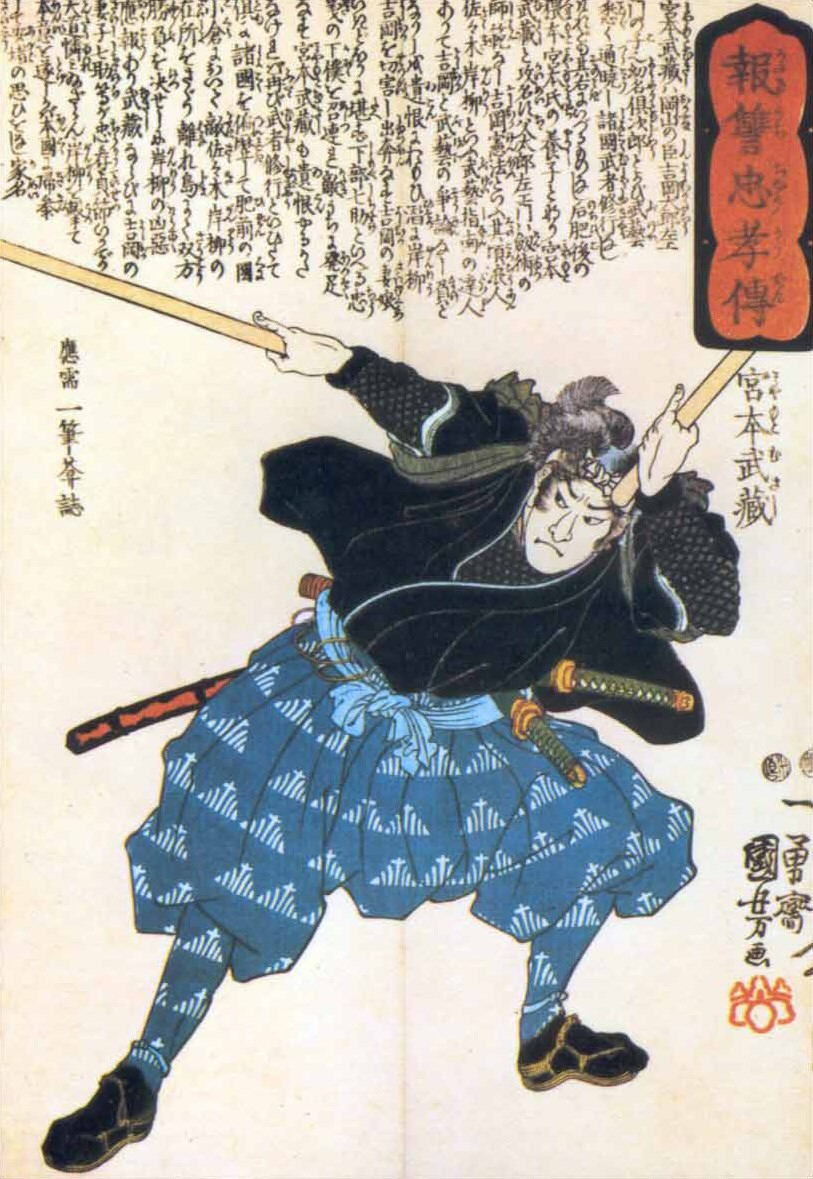
Swordsman, painter, sculptor, calligrapher, philosopher. Undefeated in over sixty duels. Wrote two of the most enduring works on strategy and self-mastery in human history.
Enter the chapter →The way is not in reading. It is in training.
You have done the reading. Now the master must see you.
Twenty questions. Four minutes. One direction.